

Engineers for Social Impact
Mission, Vision, and History of the EfSI Program
Mission
For engineering students to be embedded with, and learn from, communities and individuals who are aspiring to thrive in challenging circumstances and whose lived realities inspire students to expand their scope of thinking, ways of knowing, and approaches to problem solving.
Vision
Graduates of the NYU Abu Dhabi Engineering program, regardless of their specialization, will go on to create value for society in ways that will, as a result of their participation in the EfSI program, exhibit a deeper care for and broader consideration of the complex interplay between individuals, technology, society, development, and human progress.
History
Engineers for Social Impact (EfSI) at NYU Abu Dhabi came to life for the first time in Sri Lanka in 2013 as the brainchild of Carol Brandt, Sunil Kumar, and Ramesh Jagannathan. At the program's instantiation, NYUAD was barely three years old, so the entire Engineering Division – faculty, research staff, global academic fellows, students, and admins – were invited to take part. We partnered with Habitat for Humanity in Sri Lanka and spent spring break building with them in Negombo. This initial program included the concept of a "design competition" in which students would, while in Sri Lanka, seek to imagine new solutions and innovations that would be well-suited to the community; we later, in service of remaining true to our mission, removed this element from all future collaborations with Habitat.
In 2014, the program evolved to create, in addition to a track for first year students similar to our initial program, a second track for students further along in their studies that focused more on co-developing projects with a community over a longer period of time. The first year students, once again, worked with Habitat for Humanity in Sri Lanka but in Galle this time. The second batch of students worked with the Solar Energy Foundation of Ethiopia on projects in Rema, Ethiopia.
As the programs matured, it became clear that we needed to clarify the flow of value in these endeavors. One could be forgiven for incorrectly thinking that these are volunteer programs in which we donate our valuable manual labor to Habitat for Humanity. However, if that were true, it would be more cost-efficient to donate funds to hire local labor rather than fly students, unskilled in construction trades, halfway around the world for a week's work. Clearly, for the equation to balance and to justify the expenditures, we must also be receiving value, and it comes in the form of intellectual growth for our students.
To put a finer point on this value exchange, we crafted and ever-evolving assignment (embedded below) that asks our engineering students to adopt the persona and mindset of an ethnographer while working with communities. This specifically frees the students, who are typically in the first-year of their studies, from any notion of needing to "solve a problem" in the community; in fact, the assignment structure eventually landed on language that specifically forbids any such notion. Rather, the focus is on deep listening, story collection, and astute observation, requiring students to return to campus having learned, the most anyone possibly could, from and about the community.
As the track for students working with Habitat for Humanity was evolving, so was the track for students working on longer-term projects. Our first collaboration with the Solar Energy Foundation in Ethiopia was, sadly, too logistically challenging to continue for future groups. Instead, after an exhaustive exploration of collaboration opportunities in Mumbai, we began a partnership in 2015 with URBZ, a professional practice of architects, urban planners, and anthropologists based in Dharavi, a "Homegrown City" in the heart of Mumbai. This partnership has, ever since, served as the foundation of our project-focused track.
While the programs have experienced their ups and downs over the years, being stressed up to and beyond discovered natural limits, we believe that, post 2023, we have a well-refined operating model that works for the foreseeable future. We've only ever allowed minor tweaks to the mission and vision of the program, holding them as the foundation around which all else should adapt. As a result, we now:
-
Elevate our Engineering Instructors, rather than Professors, to the role of primary faculty member, in charge of the academic mission of the trip.
-
Focus on limited group sizes. Ideally, there are no more than 18 students at any one site; this is few enough that everyone gets to know each other, and the community is not overwhelmed by our numbers.
-
Ensure that if two groups are working with communities in the same country or region, those two groups should never see each other at any point on their trips. This justifies going to extremes like booking the groups on different flights and in separate hotels. It is important to set the tone of the trip of being a learning experience shared among a small group of deeply curious individuals, rather than a spring break party trip with 40+ NYUAD students invading a hotel and immediately losing sight of why they're there.
- Recognize that for the project-focused track open to students at later stages in their studies, this work should be structured more like an internship or faculty-led research rather than coursework, as the framework of a "class" or a "directed study" is not weighty enough to elicit an appropriate vision of the seriousness of the contributions that students can and should be generating. When working with a professional practice, it should be assumed that contributions must extend, expand, or, at the very least, support the work being done by the practice; a "course" does not allow for such demands to be taken as seriously as they should be. Going forward, this work will be mentored under the umbrella of faculty-led research which may occasionally require fieldwork in Mumbai (or elsewhere).
Sites
| Year | Habitat Partner Locations | Project Partner Locations |
|---|---|---|
| 2013 | Negombo, Sri Lanka | N/A |
| 2014 | Galle, Sri Lanka | Rema, Ethiopia |
| 2015 | Trincomalee, Sri Lanka | Mumbai, India |
| 2016 | Thailand | Mumbai, India |
| 2017 | India, Jordan, Sri Lanka | Mumbai, India |
| 2018 | Jordan, Sri Lanka | Mumbai, India |
| 2019 | Jordan, Sri Lanka, Thailand | Mumbai, India |
| 2020 | COVID-19 | COVID-19 |
| 2021 | COVID-19 | COVID-19 |
| 2022 | Flint, Michigan, USA | COVID-19 |
| 2023 | Ajloun, Jordan | Mumbai, India |
| 2024 | NO SITES AVAILABLE | Mumbai, India |
| 2025 | Zambia, Kenya, Nepal | Mumbai, India |
| 2026 | Regional Conflict | Regional Conflict |
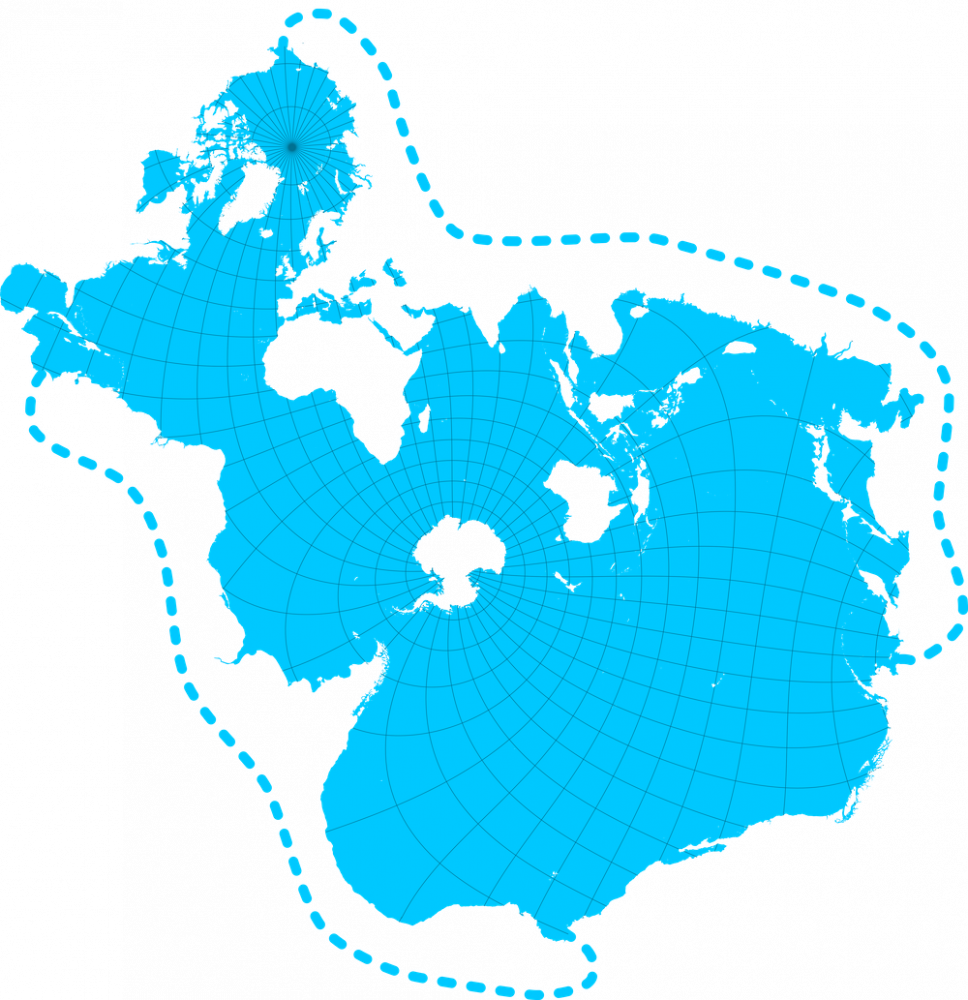
Map of EfSI Sites
Engineers as Ethnographers Assignment
Copyright © 2026 original authors. All rights reserved.